
What is a fire pit
Fire pits are anything that contains a fire, whether it be in a dug pit, or in some vessel. Fire pits are used to supply heat, whether it be to food for cooking or to people.
However, fire pits can also be used as a subtle or striking decoration to add to a property, giving a finishing touch to an outdoor space.
Types of fire pits
There are several types of fire pits, which can all be identified by the following characteristics: material, shapes, sizes, and fuel sources.
Material
Common materials used in fire pits are copper, stainless steel, cast iron, and concrete. All these materials differ between durability, cost, maintenance, and aesthetic.
Here are some short summaries of each material:
Copper fire pits
Copper is one the oldest materials used by humans for its corrosive resistance and high heat conduction qualities. Copper has a rustic aesthetic to it, which may appeal to those looking for rustic or countryside styles.
However, some disadvantages include: prone to oxidation where it will turn brown and green over time, and usually more expensive.
Stainless steel firepits:
Stainless steel is corrosion resistant and very heat resistant, making it very durable and strong.
However, stainless steel is known to be more expensive than other metals and due to its heat resistant nature, it may not distribute heat greatly.
Cast iron fire pit
Cast iron is known for its great durability and strength along with its great costs. In terms of specific benefits for fires, cast iron is corrosion resistant and has a nature of great heat retention.
However, cast iron can be susceptible to discoloration, meaning it requires maintenance and consistent cleaning as well.
Concrete fire pits
Concrete is a mix of cement along with several other figments. For this, concrete usually adopts very strong and durable qualities, while also being corrosion resistant and insulating heat.
However, concrete can adopt soot stains easily and must be sealed periodically, or in other words, it requires maintenance.
Shapes
Shapes can have a great influence on heat dispersion, aesthetic, and cooking. Common shapes between fire pits include, square, round, bowl, table, and chiminea. Here are some summaries of each shape:
Square
Square fire pits are usually used to give a modern aesthetic or feel, though, can certainly be used in for more rustic or traditional styles. With this, square fire pits, due to its sharp edges, are great for accommodating furniture; not only in terms of fitting into spaces, but as well as replicating the edges of your outdoor fridge, counters, chairs, walls, and even the roof of your home.
However, a disadvantage is its poor even heat dispersion.
Round
Round fire pits are known for their traditional, rustic, and welcoming styles, often being used in traditional or natural settings. Moreover, round fire pits disperse heat evenly, making it great for warmth purposes.
However, round fire pits, on top of being unmodern, are usually hard to accommodate with surrounding furniture and sometimes environments; not only in fitting the fire pit into certain spaces, but the round edges disrupt the common pattern of the sharp edges of the chairs, counters, walls, etc.
Bowl
Bowl fire pits are probably the most versatile in aesthetics, where you are able to find ancient, rustic, traditional, or modern styles that can adapt to any environment. On top of this, most bowl fire pits are portable, meaning when they are not in use, you can store them, and prevent them from wearing out over time. Many bowl fire pits also are very great for cooking, while also providing exceptional warmth and heat dispersion.
However, some disadvantages include that the bowl fire pit can create a great amount of smoke, it requires regular maintenance, and they can be quite expensive.
Tables
Table fire pits really get their aesthetic from the table itself, meaning that technically, table fire pits can really adopt any aesthetic. With this, table fire pits are really great for small spaces, where the table itself can become an extra counter top shoved in the corner, or the main dining table in the center of the space.
Although, because the size of the fire pit is usually small due to the table, these fire pits are not exactly great at dispersing heat. As well, most table fire pits do not allow for cooking as well.
Chimineas
Chimineas can really have any aesthetic to them, making them very flexible to fit into any environment. On top of this, many chimineas allow you to cook properly, while not emitting any smoke.
On the contrary, chimineas do not disperse heat evenly (though are great at directed heat), and depending on the material, the chiminea may require regular maintenance.
Sizes
Sizes in a fire pit can determine heat dispersion, cost, and whether it can be used as decoration or warmth or both. There are a few sizes that a fire pit may come in: large, small, and portable.
Here is a summary of each of these sizes.
Large
Large fire pits are great at being a decoration and focal point in the yard. Along with this, large fire pits are great for large gatherings due to its warmth; really being the center of the environment in all aspects.
On the other hand, large fire pits are only suitable for large areas, and as well cost more than the rest of the other sizes.
Small
Small fire pits are great at being a small decoration in large environments, and being the focal point in small environments. On top of this trait, small fire pits obviously cost less than that of the large fire pit.
However, of course due to its small size, small fire pits are only good for small gatherings, and when it comes to cooking, only so much food can actually be cooked at once.
Portable
Portable fire pits are great for cooking, and since they are portable and small, can really be brought, stored, or placed anywhere (including indoors).
However, these fire pits can not really be used for warmth, mainly due to its size and quality of supplying direct instead of evenly dispersed heat. It is also necessary to note that portable fire pits are generally affordable, however, propane can get expensive.
Fuel
Fire pits can use a variety of different fuel sources: wood, natural gasses, propane, and electricity. All these fuels can be compared with each other by their active maintenance (maintenance during fires), passive maintenance (maintenance before/after fires), cost, safety, and heat generation.
Here are some summaries on the different fuel sources.
wood
Wood as a fuel source can either be free (assuming you sacrifice time and effort to harvest fire wood), or affordable (assuming you sacrifice about $7 for a bundle of fire wood). To add on, wood is great at generating very high and efficient heat levels; great for warming.
However, active maintenance can be a hassle, very messy, and certainly very dangerous. On top of this, you of course need to have wood in order to start and keep the fire, meaning its passive maintenance is not exactly easy either.
Natural gasses
Natural gas as a fuel source means that there is no active or passive maintenance due to the fact that its connected to your gas line. Because of the lack of maintenance, natural gas is generally more safe as a fuel source than all the other options (assuming the gas line is installed properly). Also, natural gasses can generate a great amount of heat, making it good for both warmth and cooking.
However, natural gas fire pits will increase your gas bill, and can get quite expensive depending on the usage.
Propane
Propane as a fuel source is great at being a clean source of energy for cooking. Propane is also very safe, unless propane is not assembled properly when it comes to portable fire pits. Propane also does not require too much active maintenance either.
However, in terms of passive maintenance, you will need to refill your propane tank periodically. To add on further, Propane can be quite costly ($2.50/gallon), and as well can not be efficiently used for warmth if being used in a portable fire pit.
Electricity
Electricity as a fuel source requires no active or passive maintenance since the fire pit is connected to your home electricity, and is easy to use/manage. On top of this, electric fire pits are the safest overall.
However, these fire pits will obviously increase your electrical bill, and as well, these fire pits are not as great at generating heat as that of the other fuel sources.
What firepits are best for you
I have created a few charts comparing and contrasting types of fire pits along with considerations based off of their respective qualities in the material category, shape category, size category, and fuel category.
Take time to look over each one of these charts, to see what fire pit components are best for you.
Material
The material your fire pit will be (copper, stainless steel, cast iron, or concrete) can be measured off of the following categories: Cost, durability, maintenance, and aesthetic.
Cost | Durability | Maintenance | Aesthetic | |
Copper | Most ($6.75/Ib) | Least | 2nd | Rustic |
Stainless steel | 2nd ($2.5/Ib) | Most | Least | Modern |
Cast iron | 3rd ($0.17/Ib) | 3rd | Most | Modern |
Concrete | Least ($0.13/Ib) | 2nd | 3rd (for sealing) | Any |
Shapes
The shape your fire pit (square, round, bowl, table, or chiminea) will take can be categorized by the following: even heat dispersion, aesthetic, and application (cooking, warmth, or primarily decoration)
Even heat dispersion | Aesthetic | Application (cooking, warmth, or primarily decoration) | |
Square | 3rd | Modern | Warmth |
Round | Most | Welcoming | Warmth |
Bowl | 2nd | Any | Both |
Table | 4th | Any | Decoration |
Chimineas | Least | Mainly rustic | Cooking |
Sizes
The size of your fire pit (large, small, potable) can be identified by these key categories: Heat dispersion, cost, and application (Cooking, warmth, or decoration)
Heat dispersion | Cost | Application (Cooking, warmth, or decoration) | |
Large | Most | Most | Warmth/decoration |
Small | 2nd | 2nd (could be least) | Warmth/decoration |
Portable | Least | Least (could be 2nd) | Cooking |
Fuel
The fuel that your fire pit will use (wood, natural gas, propane, electrical) can be organized into these considerations: Active maintenance (maintenance during active fire), passive maintenance (maintenance before and after fire), cost, safety, and heat production.
Active Maintenance | Passive Maintenance | Cost | Safety | Heat production | |
Wood | Most | Most | Depends ($0 - $7/bundle) | Least | Most |
Natural gas | 3rd (could be least) | Least (none) | Least | 3rd | 3rd |
Propane | 2nd | 2nd | 2nd | 2nd | 2nd |
Electrical | Least | Least (none) | 3rd | Least | Least |
Overall, as seen, all these components of a fire pit have advantages and disadvantages when compared to each other.
However, it is about finding the one that is right for your proper use case. Hence, go through these charts, balancing out what you need and want. From here, it will be a lot easier to begin searching for the perfect fire pit for your property.
What Cione’s Hardscape & Masonry can do for you
If you are planning on constructing your own unique fire pit, our outdoor structures (including fire pits) construction and design services can fulfill any one of your needs or desires, while also giving you a satisfactory experience, with discounts and benefits along with exceptional pricing for you.
We are eager to relieve you of your landscaping burdens, and aid you in your landscaping desires:
Get Your Free Estimate at (857-251-1087) or (h.m.ciones@gmail.com) or our online form (do not hesitate to contact us with any questions concerning our services and specialties).
For more information concerning fire pits, whether it be construction, design, or tips, check out more of our blogs.
What are retaining walls
Retaining walls are a structure (wall) that obstructs the natural slope of earth; countering the lateral pressure of the slope - or the force asserted onto the retaining wall by the slop.
Retaining walls are usually used for the following purposes: prevent erosion, improve drainage, create a terrace, as a landscape feature, or other purposes.
Types of retaining walls
Retaining walls in this guide will be identified by the following two properties: structure and material.
Types of retaining wall structures
There are four main types of retaining walls: Gravity, cantilever, anchored, and Mechanically Stabilized Earth (MSE)
Gravity walls
Gravity walls are a common type of retaining wall for most residential properties.
These walls are mainly used for raising beds or creating terraces, with added erosion control.
placed partially underground, the wall uses only its own weight (mass and gravity) to withstand the lateral force exerted by the soil behind it.

However, due to this nature, gravity walls are only limited to about four feet before they may be susceptible to collapse.
Despite this, Gravity walls are great since they can be made out of a variety of materials, they are DIY friendly, and require little maintenance.
Cantilever walls
Cantilever walls are another common retaining wall, used a lot for high stable bed raising, and high-load erosion.
An L-shaped wall is placed partially underground, where the (toe or heel) slab is placed under all of the soil’s weight, acting almost like an anchor, to keep the main wall (stem) in place, along with already the stem’s own weight.

Essentially a gravity wall, where the mass is increased by the use of a slab carrying the weight of the soil.
These walls can typically be built all the way up to twenty-five feet, being completely stable and reliable while requiring only checks every other year.
However, this wall in order to be DIY friendly, would need a person who is already experienced in engineering.
Anchored walls
Anchored walls are a common retaining wall used most to prevent high load erosion, and create very stable terraces.
Anchored walls may be used when an over a twenty feet wall is needed, when there is limited space, or when the soil is soft.
Supported independently by an anchor, the retaining wall stays in place by using cable tension, provided by the anchor behind it within the soil.

Anchored walls as suggested above are great when there is a need for height and great stability.
However, Anchored walls are complex and require good engineers and a construction team. Along with this, anchored walls require a good amount of maintenance.
Mechanically Stabilized Earth (MSE)
MSE walls are another common retaining wall type used commonly for its natural look, great prevention of erosion, and preservation of even the steepest of slopes.
Created from a variety of different materials, a large compact artificial barrier is made with inner reinforcements (usually steel strips).
Where, veneers, panels, or slabs are then pasted onto the outside of the barrier.
This design primarily relies on its weight (mass and gravity) and its reinforcements within, to keep it in place.

Essentially a gravity wall with inner reinforcements.
MSE walls are as stated above, great for when tall and stable structures are needed. To add on they can be constructed fast; great for on demand.
However, MSE walls are not DIY friendly and are usually more expensive.
Retaining wall type structure comparisons; what structure of retaining wall type to choose
For those of you who are deciphering which type of retaining wall to choose from, or are just interested in the similarities of these walls, I have made a comparison chart.
Height (1=best) | Steepness (1=best) | DIY potential (1=best) | Cost (1=best) | Construction speed (1=best) | |
Gravity walls | 4 | 3 or 4 | 1 | 1 | 2 |
Cantilever walls | 2 | 3 or 4 | 2 (caution) | 2 | 3 |
Anchored walls | 1 | 2 | No potential | 3 | 4 |
MSE walls | 3 | 1 | No potential | 4 | 1 |
For those interested in DIY, I would focus on the gravity walls and the cantilever walls. Although, be cautious with cantilever walls for as though feasible via DIY, it is best to consult an engineer.
Type of retaining wall material
Retaining walls can also be classified by their materials. Here are some summaries of the four main types of retaining wall materials, all judged by their strength, durability (includes weather resistance), aesthetic, cost, and DIY potential.
(Note that maintenance is a quality that no matter the material, should be periodic when it comes to retaining walls).
Before continuing on with this section: the costs written were taken from Haley Nothstein article on Angie. For updated prices, refer to her article at How Much Does It Cost to Build a Retaining Wall? [2026 Data] | Angi
Concrete

Concrete retaining walls are retaining walls made from either poured concrete, or stacked concrete slabs.
Concrete, a mix of cement with other materials, is generally known to be one of the strongest of artificial materials.
Hence, these concrete retaining walls are one of the strongest out of the retaining walls due to their great strength and durability in even harsh climates.
These walls are also great for neutral, minimal, and modern designs, while still being quite DIY friendly.
However, concrete compared to the other materials in this list, is generally more expensive at about $30-$50/square foot according to Nothstein’s article on Angie.
Stone

The image above is of an actual stone retaining wall project from Cione's Hardscape and Masonry.
Stone retaining walls are another type of retaining wall that uses stone.
Stone is the strongest of materials in this list due to its natural qualities of its great strength and weather resistance.
For this, stone retaining walls are the strongest and most durable out of the other retaining walls.
Stone retaining walls also give a more rustic aesthetic, which may be a great benefit to those who enjoy such styles.
However, without at least a proper understanding of stone arrangement and building, stone retaining walls are not as DIY friendly as that of the concrete.
On top of this, stone retaining walls can get to very expensive prices, at $20-$100/square feet according to Nothstein’s article on Angie.
Brick

Brick retaining walls are a type of retaining wall that uses brick.
Brick, being a clay mold mixed with several other materials, is not as strong or durable as that of concrete or stone.
For this, brick retaining walls are not great for when strength or durability is needed, unless combined with stone or concrete (although, great strength is still absent) which is not uncommon.
These retaining walls are also not very DIY friendly unless at the very least the person knows brick arrangement and building.
However, for those who enjoy more classical and welcoming styles, brick retaining walls are a great choice, especially when combined with stone or concrete in terms of aesthetic.
Brick retaining walls are also quite less expensive compared to that of the concrete or stone, with $20-$25/square foot according to Nothstein’s article on Angie.
Timber

Timber retaining walls are retaining walls made from timber.
Timber, no matter the type, is generally a weaker and less durable material compared to that of stone, concrete, and brick.
(Though, timber when waterproof, depending on the type, can last up to 20 to 40 years).
However, timber can give you an excellent natural and welcoming aesthetic.
Timber is also very DIY friendly, perfect for those not equipped with much experience or for those who do not want to handle complex techniques or material.
On top of this, timber is generally less expensive than that of the materials above, at about $15-$30 according to Nothstein’s article on Angie.
Comparing retaining wall materials; what retaining wall material type to choose
For those choosing which retaining wall material to choose, or are interested in how these materials can be compared, I have made a chart illustrating the qualities of each material by strength, durability (includes weather resistance), aesthetic, cost, and DIY potential.
Strength | Durability | Aesthetic | High cost (sq/feet) | DIY potential | |
Concrete | 2nd | 2nd | Neutral | 2nd ($30-$50) | Good |
Stone | Greatest | Greatest | Rustic | Highest($20-$100) | Depends on preparation |
Brick | 3rd | 3rd | Classic | 3rd ($20-$25) | Depends on preparation |
Timber | Least | Least | Natural | Lowest ($15-$30) | Great |
Ideas for a retaining wall
There are several ideas that you can execute, to make your retaining wall or walls more aesthetically pleasing.
Hence, here are seven different ideas that can significantly enhance your retaining wall.
Hierarchy
Hierarchy in retaining walls refers to the different levels that two or more retaining walls cana take relative to each other.
Including a hierarchy in your retaining wall will enhance the visual structure of the retaining wall, making it look more appealing and elegant, while also offering more depth, in which we naturally find appeal in.
Hierarchy also allows you to be able to include features such as a garden bed or unique lighting, which can further enhance the aesthetic.

Curves
Curves in a retaining wall, is a curve in the layout of the retaining wall. This wall layout can enhance the aesthetic of the wall, not only adding more depth that are eyes love, but also creating a welcoming atmosphere.

Capstones
Capstones on a retaining wall are the little slabs that sit on top of the wall. These are great as they put more depth and structure to the wall, making it more appealing to our human minds that love pattern and completeness.
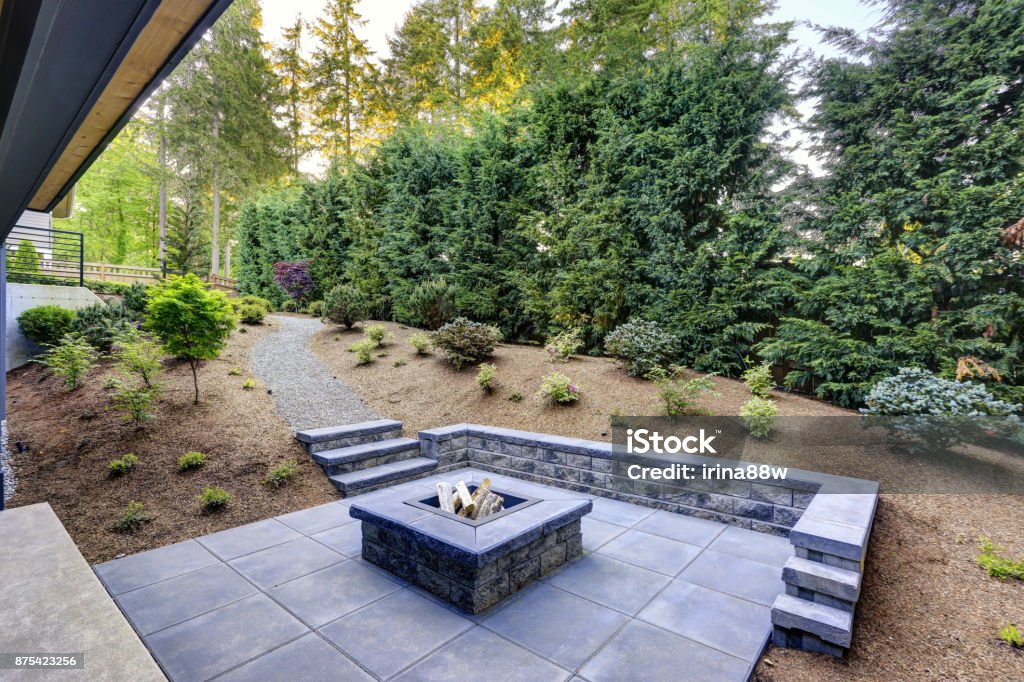
It is also good to mention how these capstones can be used for sitting or placing items on; great for around campfires or patios.

Garden beds
Garden beds are little gardens or areas, filled with plants or flowers, being a great addition to retaining wall, adding a whole new layer of aesthetic and feeling.
Garden beds are also an opportunity to get into gardening, whether it be a hobby, or actually producing food for either yourself or outside animals to eat.

End posts
End posts, also known as king posts, can be added to the end of a retaining wall in a variety of different formations. These end posts, especially when combined with capstones, will complete the wall, making its structure and appearance feel satisfying and appealing, with more unique structures to look at.

Patio
Many people think of retaining walls as an addition to a patio when in reality, it can be the element in the landscape that opened the opportunity to install the patio in the first place.
Hence, if you have the opportunity, especially with retaining walls that have capstones, a patio would be a great aesthetic to add to the environment while also being a functional element.
Material aesthetic
Retaining walls can be made out of a few different types of materials, with four main ones being listed in the (types of retaining walls) section, and depending on the material, the retaining wall can take on a variety of different aesthetics and looks.
Concrete
Concrete retaining walls as mentioned before, concrete can give you a neutral, minimal, or in some instances a more modern look and aesthetic.

Stone
Stone retaining walls as explained before, can take on a natural and welcoming feel and aesthetic.

Brick
Brick retaining walls can offer you a very classical look as talked about before, but brick can also offer you a very welcoming look and aesthetic as well.

What Cione’s Hardscape & Masonry offers
No matter the type of retaining all you want, or the ideas that you want to execute, our walls and retaining walls construction and design services can fulfill any one of your needs or desires, while also giving you a satisfactory experience, with discounts and benefits along with exceptional pricing for you.
We are eager to relieve you of your landscaping burdens, and aid you in your landscaping desires:
Get Your Free Estimate at (857-251-1087) or (h.m.ciones@gmail.com) or our online form (do not hesitate to contact us with any questions concerning our services and specialties).
For more information concerning retaining walls, whether it be construction, design, or tips, check out more of our blogs.
The origins of stone veneers
Stone veneers can be traced back all the way to ancient times, when the Egyptians would use thin-cut limestone (veneers) to protect and preserve their temples and pyramids. Or when the Greeks and Romans would cut marble into thin pieces (veneers), which can actually be seen on some parts of the famous Colosseum in Rome.
During the late 19th century, in the midst of the industrial revolution, stone veneers took on a more significant role within the new innovation of skyscrapers and tall vertical structures.
Since tall vertical structures could not be constructed with regular stone, due to the very thick and mainly heavy characteristics of regular stone, which could cause the structure to collapse under its own weight, architects, desiring to have a stone exterior for these skyscrapers while minimizing weight, found their hope in stone veneers.
By gathering thinly cut stone pieces and attaching them to a load-bearing wall, many buildings during the Industrial Revolution were properly built.
Of these buildings, the Empire State Building in the heart of New York City, built in the early 1930’s, acts as an ultimate representation of the use of stone veneer during the industrial revolution.
The new application for stone veneers ultimately initiated further innovation of these sidings, especially with the narrowing of the thickness as time passed.
With this, Stone veneers began to really pop off, especially in the 1950’s, and never really stopped beyond this decade, leading us into today, with several new types of stone veneers and applications for them.
What are stone veneers
Stone veneers sidings are a decorative material meant to imitate natural stone either within the interior or exterior of structures.
These sidings are known for their very thin and light characteristics, which is a main factor to its low prices (compared to regular stone) and easier installation compared to other forms of material.
Stone veneer is also known for its incredible flexibility, being able to be cut into significantly thin lengths, widths, and, of course, thickness, allowing for these veneers to be installed anywhere from the smallest areas within the interior of a building to the greatest areas on the exterior.
Now, the material of stone veneer can differ, and really depends on how the siding was formed. There are two different ways stone veneers are formed: either from simply being cut from natural stone (authentic) or manufactured by mixing several pigments with cement.
The authentic formation of stone veneer is called natural stone veneer, and the manufactured formation of stone veneer is called manufactured stone veneer (or faux stone veneer).
Natural stone veneer
Natural stone veneer sidings are an authentic type of stone veneer siding that is directly cut, usually from ¾ inches up to 1¼ inches, from natural stone. This means that the natural stone veneer has the natural look, feel, and aesthetic of regular natural stone.
On top of this positive characteristic, natural stone veneer is naturally more durable and weather-resistant compared to the manufactured version.
However, one disadvantage that usually deters is the price, as natural stone is more expensive than manufactured stone veneers (although it is important to note that the price difference could be minimal depending on the supplier)
Manufactured stone veneer
Manufactured stone veneer siding, or faux stone veneer, is an artificial type of stone veneer siding that is a product of a mix of cement, with several pigments and plastics, which is then poured into a mold that forms its shape and size.
Despite its inauthenticity, this type of siding actually has a pretty great look and feel of natural stone, nearly adopting the natural stone aesthetic perfectly.
On top of this, manufactured stone veneer is less expensive than natural stone veneer, which is a result of its artificial material and easier process of production, as well as its easier transportation.
However, one disadvantage of these artificial sidings is that it is less durable than natural stone veneer.
Comparing natural&manufactured stone veneers
Pricing | Durability | Authenticity | |
Natural stone veneer | More | Greater | authentic |
Manufactured stone veneer | less | Least | Artificial (authentic feel) |
Applications for Stone Veneers
Stone veneer sidings, due to their lightweight and easy installation qualities, are much more flexible in where you put them. In addition, stone veneer sidings usually come in a variety and diverse selection of stones and stone types, hence why stone veneers are considered very flexible in placement and in style.
The following sections are a few different popular places where stone veneer is used. These may be used as ideas or for general understanding.
Application for the exterior
Stone veneer can be used as an exterior to homes to give a greater aesthetic, and can actually benefit the building or structure by acting as a weather-resistant barrier, protecting the walls behind it.
Stone veneer sidings are most popularly placed in the following areas: outdoor fireplaces, full exterior walls, outdoor grills or kitchen areas, columns, home facades, and many landscaping features.
Applications for the interior
Stone veneer sidings can be used in the interior for aesthetic purposes – usually for a warmer aesthetic – and are most commonly used in the following areas: accent walls, bathroom walls, islands, kitchen backgrounds, and a variety of other areas.
Why should you choose stone veneer?
When debating whether to choose stone veneers or other materials, it is important to consider the following:
Style, is stone veneer your preferred style and feel? If so, which type of stone veneer fits your style?.
Durability, is stone veneer durable enough to handle your needs? If so, which type of stone veneer is just right for your need of durability?
Maintenance, how will stone veneer affect your time and money in the long term? (generally however, stone veneer requires little maintenance, if any at all, depending on the type)
Lastly, financial budget, does stone veneer fit your budget? If so, which type of stone veneer is more budget-friendly for you?
When considering these questions, be sure to mentally keep track of all your answers and to balance out your answers according to what you need and your preferences.
How we can help you
If you have discussed these questions and feel ready to begin installation, visit (website) for a free estimate, where we can find your proper material and begin installation as fast as possible for a great price.
You may fill out our online form on (website), email us at (email), or text/call us at (phone), where we will respond according to our business hours.
We are always here to serve your needs and fulfill your wishes.